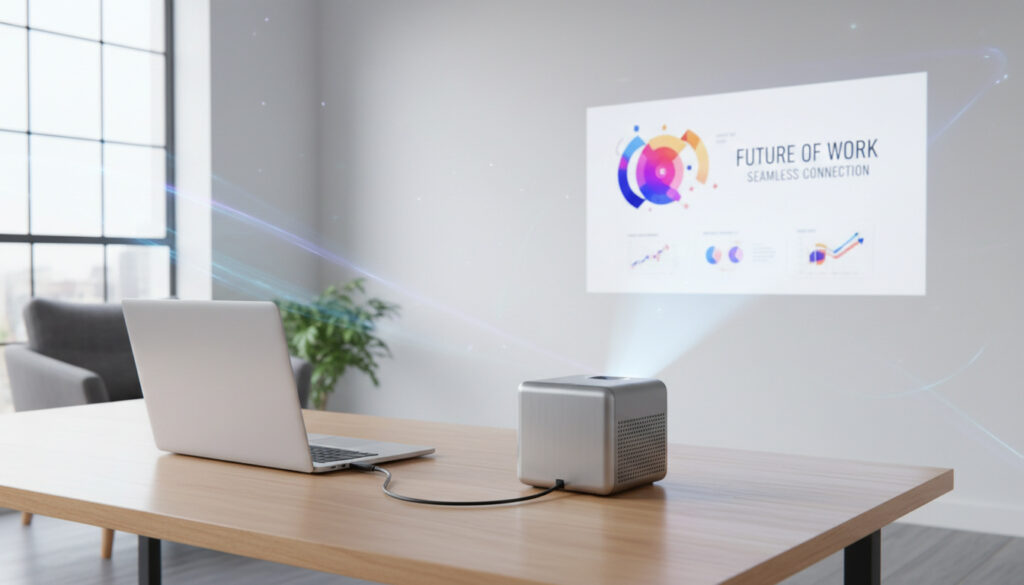
Kuinka Yhdistää Kannettava Projektoriin – Selkeät Ohjeet
Reliable Projection: Connecting Your Laptop to Any Display
Whether you are delivering a boardroom presentation or setting up an outdoor cinema, establishing a stable connection between your laptop and projector remains a critical technical hurdle. Modern devices offer multiple pathways for video output, yet compatibility issues, adapter requirements, and resolution limitations continue to frustrate users. Understanding the specific protocols and physical standards governing these connections eliminates guesswork and prevents last-minute technical failures.
Connection Methods at a Glance
HDMI: The current standard for digital video and audio transmission, supporting resolutions up to 8K.
USB-C/Thunderbolt: Versatile ports carrying DisplayPort signals, enabling single-cable solutions for video, data, and power.
Wireless Casting: Protocols like Miracast and AirPlay eliminating physical cables through Wi-Fi Direct.
VGA/DVI: Legacy analog and digital standards still present in institutional projectors and older hardware.
Critical Compatibility Factors
Video output success depends on three primary variables: port availability, signal protocol support, and bandwidth capacity. Microsoft’s display architecture handles most modern connections through plug-and-play drivers, though manual configuration sometimes becomes necessary for extended desktop arrangements or duplicate mirroring.
Resolution mismatches create the most common failure points. A laptop outputting 4K content to a 1080p projector results in downscaling, while the reverse scenario produces unsupported signal errors. HDMI Licensing Administrator specifications define version-specific capabilities, with HDMI 2.1 supporting 48Gbps bandwidth compared to the 10.2Gbps ceiling of HDMI 1.4.
Comparative Analysis of Connection Standards
| Method | Max Resolution | Audio Support | Cable Length Limit |
|---|---|---|---|
| HDMI 2.1 | 8K @ 60Hz | Yes (ARC/eARC) | 3 meters passive |
| USB-C DP Alt Mode | 4K @ 120Hz | Yes | 2 meters |
| Miracast | 1080p @ 60Hz | Yes | 30 meters (Wi-Fi range) |
| VGA | 2048×1536 | No | 15 meters |
Implementation Specifics
Physical connections require matching the laptop’s output port to the projector’s input. When direct compatibility fails, specialized AV adapters must convert signal types without altering the digital handshake between devices. Intel’s technical documentation emphasizes that USB-C video output requires DisplayPort Alternate Mode support, a feature not universal across all USB-C ports.
Wireless projection introduces latency variables absent in wired solutions. Apple’s AirPlay protocol maintains synchronization within 40 milliseconds under optimal network conditions, while Miracast performance fluctuates based on 2.4GHz versus 5GHz band congestion. Enterprise environments often deploy dedicated wireless presentation systems to isolate traffic from general network usage.
For legacy hardware, VGA maintains relevance in educational institutions. Video Graphics Array specifications reveal analog signal degradation over distance, necessitating signal boosters for runs exceeding 10 meters. Separate 3.5mm audio cables compensate for VGA’s video-only specification, complicating cable management but ensuring compatibility with decade-old equipment.
Setup Sequence
- Identify available output ports on the laptop and input panels on the projector.
- Select appropriate cabling or adapters based on physical connector types.
- Establish the connection before powering devices to prevent hot-plug detection failures.
- Configure display settings to match native projector resolution.
- Test audio routing separately from video to confirm system-level output selection.
Resolving Common Failures
Black screens typically indicate EDID communication failures. Windows users access projection options through the Win+P shortcut, cycling through duplicate, extend, and second-screen-only modes. MacBook users encountering blank outputs should reset the NVRAM or check System Preferences for unrecognized screens. Apple’s hardware support resources note that Thunderbolt 3 and 4 ports require active adapters for HDMI 2.0 compatibility, whereas passive adapters limit output to HDMI 1.4 specifications.
When troubleshooting persistent detection issues, verify that your projector firmware supports the specific HDMI version your laptop outputs. Older projectors may require EDID emulation devices to properly handshake with modern graphics cards.
Wired Versus Wireless Performance
Wired HDMI and USB-C connections deliver uncompressed video streams with negligible latency, making them essential for gaming, video editing, and lip-sync sensitive content. The physical tether restricts mobility but guarantees bandwidth stability regardless of network traffic.
Wireless solutions prioritize convenience over absolute fidelity. Wi-Fi Alliance Miracast specifications support WPA2 encryption for secure corporate presentations, though compressed video streams may reveal artifacting during fast-motion sequences. Battery consumption increases significantly during wireless casting, reducing laptop untethered runtime by 30-40 percent compared to wired counterparts.
Industry Perspectives
“The transition from VGA to digital outputs completed years ago, yet we still see compatibility nightmares because users assume all USB-C ports handle video. Education about Alt Mode and Thunderbolt distinctions remains crucial.”
Display Technology Analyst, Nordic AV Solutions
“Wireless presentation technology has matured beyond novelty into genuine productivity tools, particularly in hybrid meeting spaces where multiple users share a single display sequentially.”
Chief Technology Officer, Enterprise Collaboration Systems
Essential Takeaways
Successful laptop-to-projector connections require verifying physical port compatibility before purchasing adapters. HDMI remains the safest universal standard, while USB-C offers the most streamlined single-cable solution for modern hardware. Wireless casting suits static presentations without video content, whereas wired connections handle demanding visual material without compression artifacts. Maintaining updated graphics drivers prevents the majority of detection failures across all connection types.
Frequently Asked Questions
Why does my laptop detect the projector but show a black screen?
This typically indicates a resolution mismatch or incorrect projection mode. Press Win+P (Windows) or check System Preferences > Displays (Mac) to ensure “Duplicate” or “Extend” mode is active rather than “PC Screen Only.” Ensure the projector’s input source matches the physical port receiving the signal.
Can I connect a USB-C laptop to an HDMI projector without an adapter?
No, unless the projector specifically includes a USB-C input port with DisplayPort Alt Mode support. Most projectors require an active USB-C to HDMI adapter or cable. Verify your laptop’s USB-C port supports video output; charging-only USB-C ports cannot transmit display signals.
Why is there a delay between my laptop audio and the projector speakers?
Audio latency usually stems from wireless transmission buffering or signal processing within the projector. For wired connections, check that the laptop’s audio output device is set to the HDMI or USB-C connection rather than internal speakers. Wireless protocols inherently introduce 20-100ms delays acceptable for presentations but problematic for video content.
Does connecting via VGA provide worse image quality than HDMI?
VGA transmits analog signals susceptible to electromagnetic interference and signal degradation over distance, potentially producing ghosting or color inaccuracy compared to digital HDMI. However, at shorter cable lengths (under 3 meters) with quality shielded cables, perceptible differences remain minimal for standard office presentations.
Lisaa liittyvia artikkeleita
 Boswellia serrata kokemuksia – hyödyt ja haitat
 Ylilauta Tarja mummu – kuka on Tarja-mummu
 Viaplay TV-ohjelmat tänään ja tulevat: Valioliiga, NHL, golf
 Leikitään Pikku Kakkosta – Paikkakunnat ja ajat 2026
 Halvin kiinteä sähkösopimus: vertailu, hinnat ja vinkit 2026
 BMW 5 -sarjan ostajan opas: luotettavuus ja hinta
 Iso Syöte Mökit – Poreammella Rinteiden Lähellä
 TV1 suora nyt – Katso Yle Areenasta ilmaiseksi